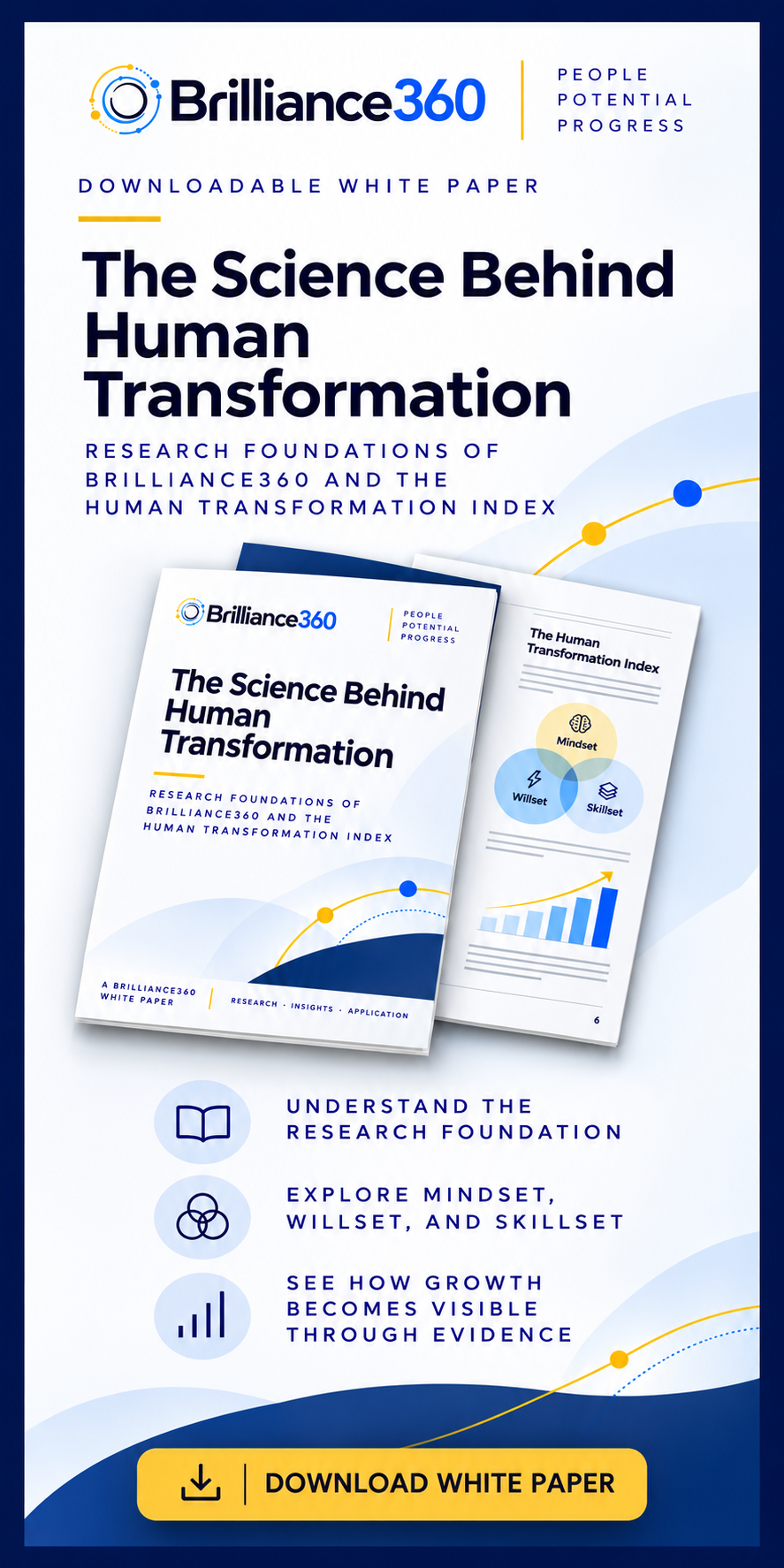
Explore the relationship among Mindset, Willset, and Skillset—and the 16 competencies that turn broad development goals into capabilities people can practice, demonstrate, and strengthen.
Discover why the reasoning behind a response matters. Meaning-making and self-authorship bring attention to how people weigh evidence, form commitments, and consider others—not simply whether they select an acceptable answer.
Examine how assessment, applied work, reflection, and supervisor or coworker perspectives contribute to a fuller account of development. The question becomes what changed, where the change appears, and how strongly the evidence supports the interpretation.
The Same Performance Gap Can Have Different Roots.
Consider three professionals who hesitate to challenge an unreliable recommendation. One may not recognize the problem. Another may recognize the problem but fear the consequences of speaking up. A third may want to respond but lack an effective way to communicate the concern. The visible behavior is similar; the developmental need may be very different. The white paper explains why Brilliance360 begins with understanding the person and the situation—not simply assigning more content. That reasoning informs the Human Transformation Index (HTI), currently in development, and a connected approach to assessment, personalized learning, applied practice, and evidence-informed growth reporting. Better development begins with a clearer understanding of what needs to change.
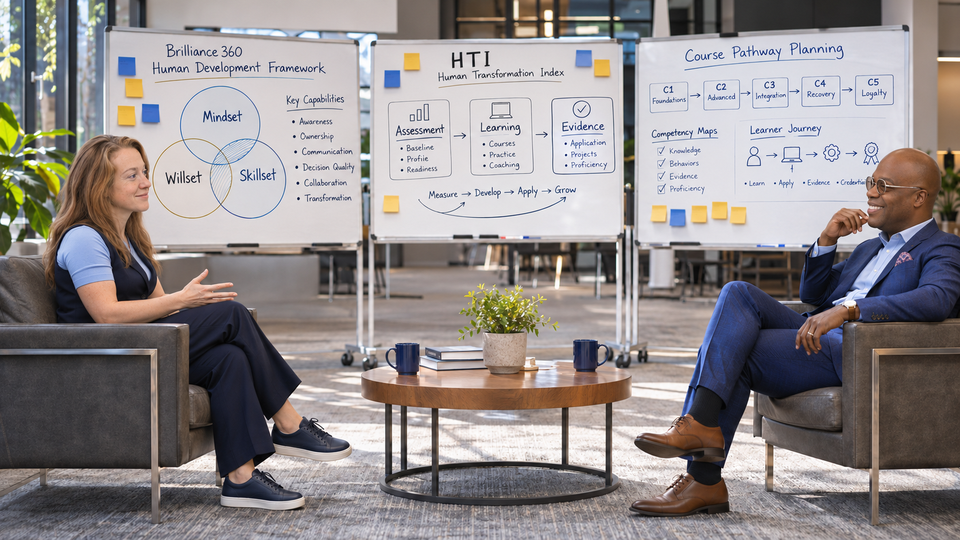
The Expertise Behind the Approach. Human Insight Meets the Science of Development.
Brilliance360 brings together co-founders Simon T. Bailey, MBA, DBA and Dr. Emily J. Barnes, EdD, PhD around a shared ambition: helping people recognize their potential and develop the capability to express that potential in everyday work. Simon contributes decades of experience in leadership development, service excellence, and human potential. His original teachings bring purpose, confidence, relationships, and personal brilliance into the development conversation. Through the Simon T. Bailey Signature Pathways, those ideas become the starting point for sustained practice and professional application. Emily brings the science of human learning, the technical perspective of artificial intelligence, and the realities of executive leadership into that same experience. Her doctorates in Artificial Intelligence and Higher Education Leadership, alongside more than 15 years of executive experience, inform a central question: does learning leave the person more capable when the support, script, or familiar situation changes? As the mind behind HTI and the architect of Brilliance360’s developmental approach, she connects that question with how capability is understood, practiced, and assessed. Together, their contributions connect the personal significance of growth with the deliberate conditions that support development. Simon’s teachings give participants meaningful ideas to act on; Emily’s approach connects those ideas with opportunities to examine, practice, and demonstrate change. The white paper explains the research foundation behind that connection.
A Stronger Foundation for Developing People.
The Science Behind Human Transformation offers a research-grounded way to examine development beyond participation and test scores. The paper connects the reasons people act with the capabilities they demonstrate—and the evidence needed to understand progress. For organizations making decisions about leadership, workforce readiness, learning, or AI-supported work, the starting point is a more meaningful question: what should people become better able to understand, decide, and do?
Download the free white paper.